
Phonics at St Francis Xavier's
At St Francis Xavier’s, we want every child to become a confident, fluent and enthusiastic reader. We know that learning to read opens doors to a world of stories, knowledge, imagination and possibility.
From the moment children join us in Reception, they begin developing the essential phonics skills they need to become successful readers. We use the Read Write Inc. (RWI) Phonics Programme, alongside carefully chosen reading experiences, to give every child the strongest possible start.
Our aim
Our aim is for every child to:
- Develop a secure knowledge of sounds and the letters that represent them.
- Blend sounds confidently to read words.
- Read accurately, fluently and with increasing expression.
- Develop a growing vocabulary and understanding of what they read.
- Enjoy books and develop a genuine love of reading.
- Become confident readers who see themselves as successful and capable
Our phonics outcomes
At St Francis Xavier’s, we are proud of the strong reading outcomes our children achieve. Our Phonics Screening Check results are above the national average, with 91% of children achieving the expected standard in 2026. In Reception, our children have also achieved excellent outcomes, with 100% achieving the Reading GLD in 2025 and 97% achieving the Reading GLD in 2026, both above the national average.
Through high-quality, systematic phonics teaching, regular assessment and additional support where needed, we aim for every child to develop a secure understanding of phonics and the confidence to apply it independently.
By the end of the RWI programme, children will be able to confidently recall and apply their knowledge of the 40+ sounds and their alternative graphemes, blend sounds to read unfamiliar words and read a wide range of real and alien words accurately.
Most importantly, we want our children to leave us not only knowing how to read, but believing that they are readers.
What is Read Write Inc.?
Read Write Inc. (RWI) is a structured phonics programme developed by Ruth Miskin. It teaches children the sounds within words and how to blend these sounds together to read.
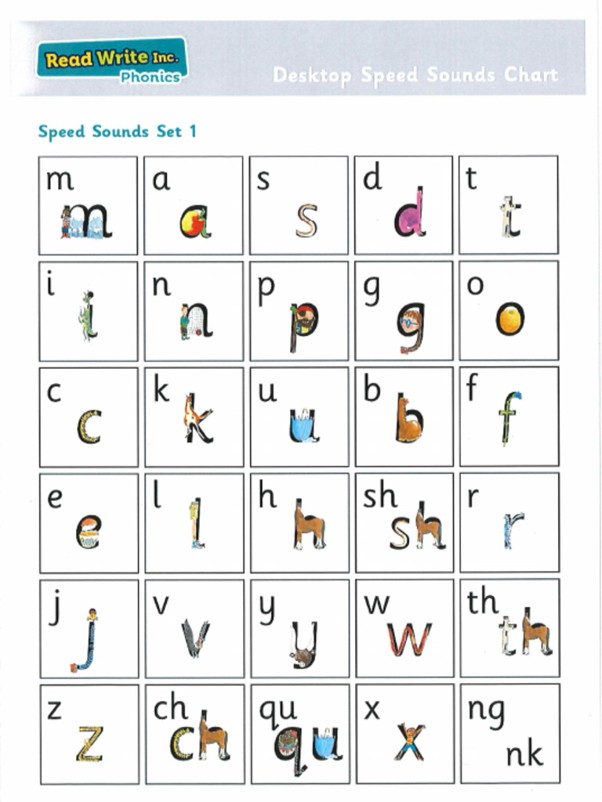
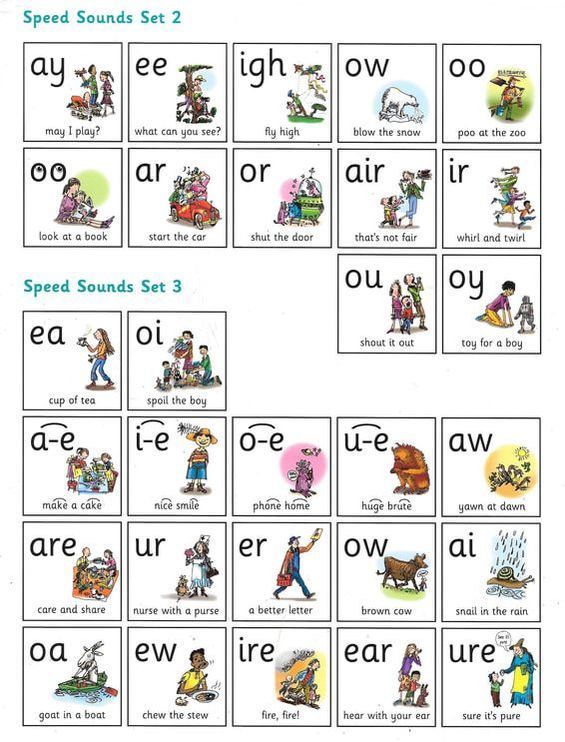
Children begin by learning the 40+ sounds they need for reading and writing. They learn how to recognise the sounds, say them correctly, and blend them together to read words. They will first learn single-letter sounds (phonemes). Once they are confident with these, they will begin to learn two-letter sounds (digraphs), which we call ‘Special Friends’ because two letters work together to make one sound. They will then move on to three-letter sounds (trigraphs) and split digraphs.
As children become more confident, they learn that the same sound can be represented in different ways. For example, the sound /ay/ can be represented by ay as in play, a-e as in make and ai as in rain.
This systematic approach means that children build their knowledge step by step, developing the skills and confidence they need to become fluent readers.
The images below show the order in which we teach the sounds, beginning with Set 1 single-letter sounds, followed by digraphs, Set 2 sounds and finally Set 3 sounds.
 |
 |
Why are 'pure sounds' important?
When learning phonics, it is important that children pronounce sounds as clearly and purely as possible. This makes it much easier for them to blend sounds together to read words.
For example:
m – a – t → mat
Rather than adding an extra 'uh' sound, we encourage children to use the pure sounds:
/m/ /a/ /t/
You can watch a helpful demonstration of how to pronounce the sounds correctly here:
https://schools.ruthmiskin.com/training/view/fYYWRKyD/ixV1icfn
Learning to blend
As soon as children begin learning sounds, they start developing their blending skills.
Blending means putting individual sounds together to read a word:
c – a – t → cat
Children practise blending regularly so that it becomes an automatic part of reading.
You can find a helpful demonstration of blending here:
https://schools.ruthmiskin.com/training/view/YjE6M5P9/uZ6vmySb
https://schools.ruthmiskin.com/training/view/5KdsnPJb/n32vVpma
Real and 'alien' words
Children read both real words and 'alien' words (also known as nonsense or pseudo-words).
An alien word might be something like plimp or thill. Although these aren't real words, they are extremely useful for phonics because children cannot simply recognise them from memory. Instead, they have to use their phonics knowledge to sound out and blend the word.
This helps us to see whether children can apply their phonics knowledge to unfamiliar words.
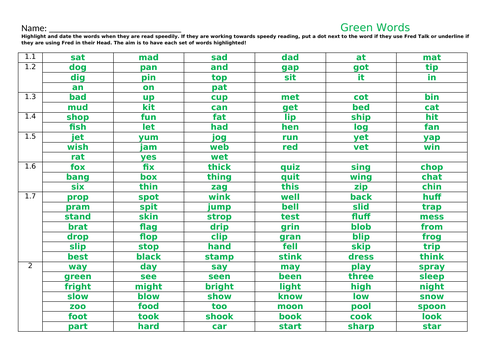
Please see below a list of the real words, also known as ‘Green Words’, that we teach the children. They begin with 1.1 and, once they are confident reading these independently, progress through the levels up to 2.
 |
How is phonics taught at St Francis Xavier's?
Children begin their RWI journey when they join us in Reception.
Phonics is taught systematically and regularly, with children learning new sounds and practising the skills they have already developed.
Children are regularly assessed so that we can carefully track their progress and identify the next steps in their learning. They are taught in groups that are matched to their current phonics knowledge, allowing teaching to be closely targeted to their needs.
We continually monitor children's progress and provide additional support and intervention where needed. Our aim is for every child to keep up with the programme and develop the confidence and skills to become a successful reader.
Our RWI approach helps children to:
Learn → Practise → Apply → Read → Re-read → Become fluent
Reading at school
Reading is at the heart of our phonics teaching.
During RWI lessons, children read lively, engaging books that are carefully matched to the sounds and words they have been learning. This means that children can experience success and develop confidence as readers.
Children read and re-read these stories to develop:
- Accuracy – reading words correctly.
- Fluency – reading smoothly and confidently.
- Expression and intonation – reading with a storyteller's voice.
- Comprehension – understanding and talking about what they have read.
- Vocabulary – learning and using new words.
The books also provide opportunities for children to discuss characters, events and ideas, helping them to develop their understanding and love of stories.
Reading at home
Reading at home is a vital part of your child’s reading journey, and you have a very important role to play!
Your child will bring home books that are carefully matched to the phonics they are learning in school. As the books contain sounds and words they have already been taught, your child should be able to read them successfully and build their confidence.
Your child will have a labelled mini Read Write Inc. folder, which they need to bring to school every day. Inside, you will find:
- Their RWI book – a copy of the book they are reading in their phonics lessons.
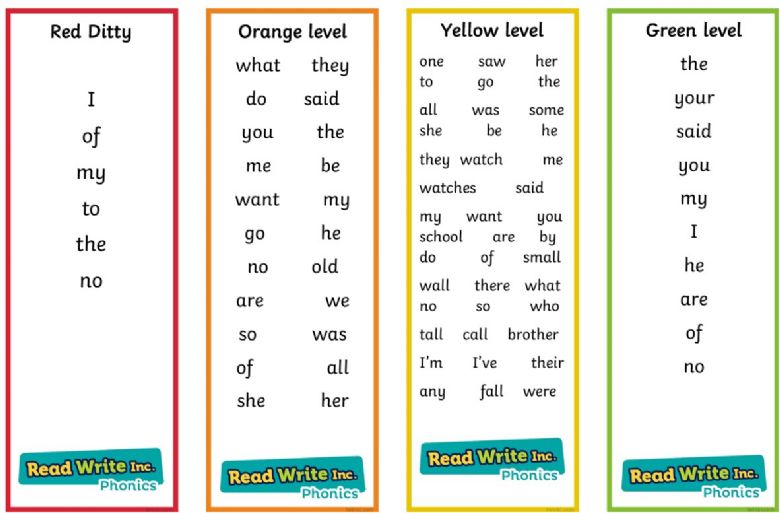
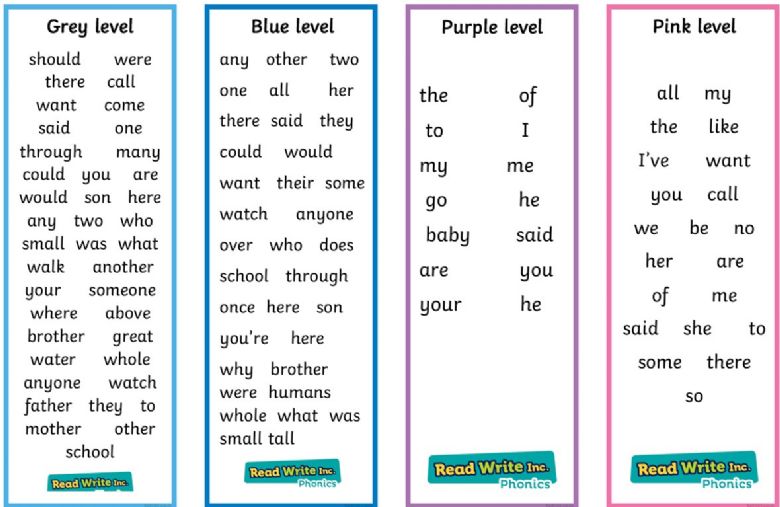
- A ‘Red Word’ bookmark – containing the Red Words their group is currently learning.
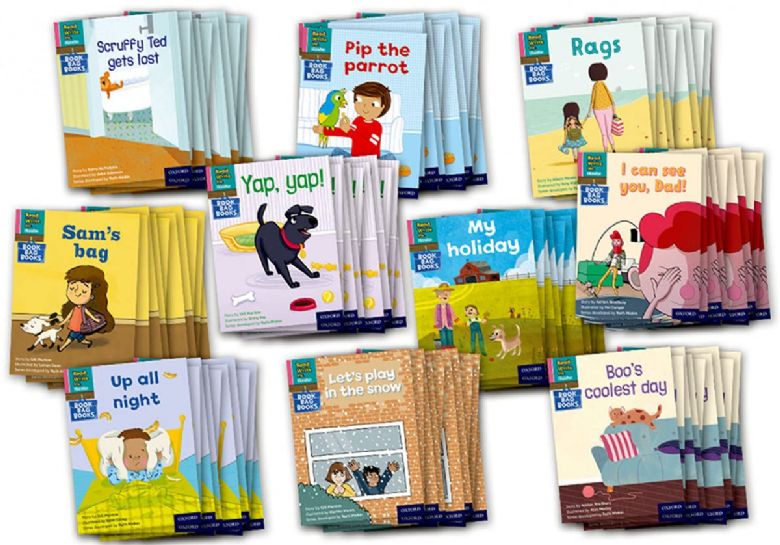
- A Book Bag Book – a book with similar themes and vocabulary to their RWI book. This can be read and practised regularly at home to build confidence and fluency.
The two books will be changed weekly, when your child moves on to a new book in their phonics lessons. The Red Word bookmark will be changed when your child moves groups, usually each half-term.
Please see below a useful video explaining why reading with your child is so important and the positive impact it can have on their reading journey.
https://schools.ruthmiskin.com/training/view/uCuHzP93/zxm3wjpL
What are Red Words?
Red Words are words that cannot be easily sounded out using the phonics sounds your child has learned. They need to be learned by sight. We call them ‘Red Words’ because they can catch us out and do not follow the usual rules for sounding out.
Regularly practising these words at home will help your child to recognise them quickly and confidently.
Please see below the Red Words for each group. As you can see, the words become progressively more challenging as children move through the coloured groups. Your child will have a copy of their group’s Red Word bookmark to bring home and practise regularly.
 |
 |
RWI Home Storybook
Your child will bring home a version of the same RWI Storybook they have been reading in school.
This gives children the opportunity to re-read a familiar story, helping them to develop their accuracy, fluency, confidence and expression.
Re-reading is not about reading the same book too many times — it is an important part of becoming a fluent reader.
RWI Book Bag Book
Once your child has read their RWI Storybook, they will also bring home a RWI Book Bag Book.
This is a new book that is carefully matched to the sounds and words your child has been practising. It gives them the opportunity to apply their phonics knowledge to a new text.
The books also include helpful guidance to support you when reading together at home.
The ‘Book Bag’ books look like the examples below. They have a turquoise label in the top-left corner of the book.
How can I help my child at home?
The most important thing you can do is read regularly and make reading a positive experience.
Try to:
- Listen to your child read their school book regularly.
- Practise the sounds your child has been learning.
- Encourage your child to use pure sounds when sounding out words.
- Encourage them to blend sounds together rather than guessing.
- Talk about the story and ask questions about what is happening.
- Praise their effort and progress and celebrate their successes.
- Read stories to your child too! Children benefit enormously from hearing adults read aloud, even when they are becoming confident independent readers.
Most importantly, keep reading enjoyable. Share books, talk about stories, visit the library and let your child see that reading is something to be enjoyed.
Please see below for some useful videos explaining why reading is so important and sharing simple strategies you can use when reading with your child at home.
https://schools.ruthmiskin.com/training/view/gLEkAvgL/sIyIUJhT
https://schools.ruthmiskin.com/training/view/cV4Tol7b/9BhxGYj6